AI automation for lead handling: reply faster, qualify better, lose fewer leads
Automation
AI automation for lead handling: reply faster, qualify better, lose fewer leads
How to use AI to capture, qualify, route and follow up on leads from forms, email and chat: the workflow, tools, a step-by-step setup, guardrails and what to measure.
In short
How to use AI to capture, qualify, route and follow up on leads from forms, email and chat: the workflow, tools, a step-by-step setup, guardrails and what to measure.
AI lead handling means every enquiry, from a form, email, chat or ad, is read within seconds, enriched with the details your team needs, scored, routed to the right person and answered with a useful first reply, while a human stays in charge of the sales conversation. For most service companies it closes the biggest leak in the funnel: slow and inconsistent first responses.
Leads cool down quickly. A person who sends three enquiries to three companies usually talks to whoever replies first with something useful. If your team answers the next morning, many of those leads are already gone. Automation does not replace your salespeople; it makes sure they spend their time on the right conversations, fast.
Where leads get lost today
Enquiries arrive in several inboxes and nobody owns them
Replies take hours or days, especially evenings and weekends
Every lead gets the same treatment, whether it is a large client or spam
Important details are missing, so the first call is spent asking basic questions
Nobody follows up after the first message
There is no record of which source brought which deal
The AI lead workflow, step by step
Step
What happens
Who does it
1. Capture
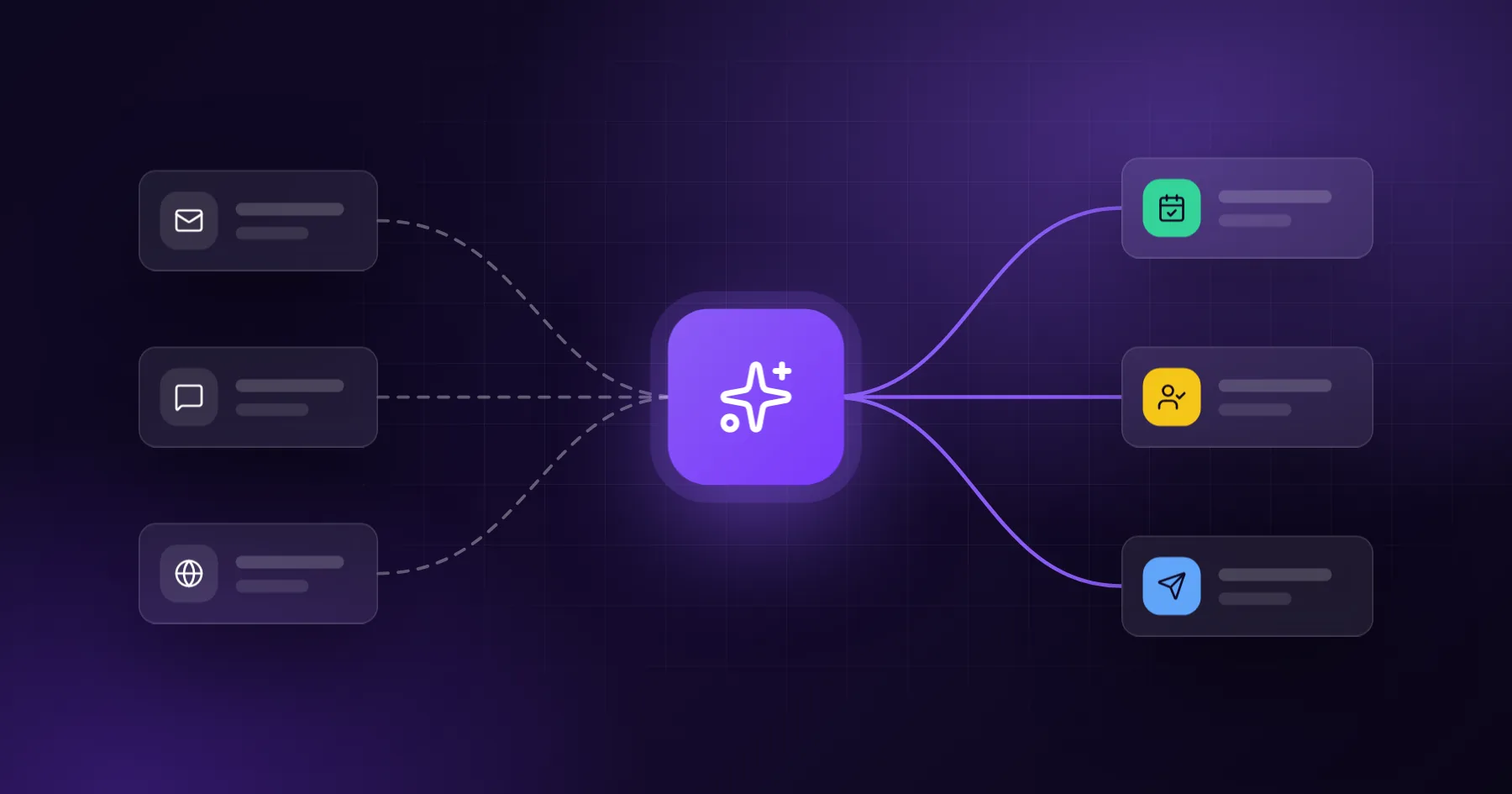
Form, email, chat and ad leads land in one place
Automation
2. Understand
AI reads the message, extracts service, budget, timeline, location
AI
3. Enrich
Company details, website and size are added
Automation
4. Score
Lead is rated against your ideal client criteria
AI with rules
5. Route
Lead goes to the right person or team in the CRM
Automation
6. Reply
A first answer is sent, with next steps or a booking link
AI draft, human approval if needed
7. Follow up
Reminders and follow-ups if there is no reply
Automation
8. Report
Source, speed and outcome are tracked
Automation
Step 1: put every lead in one place
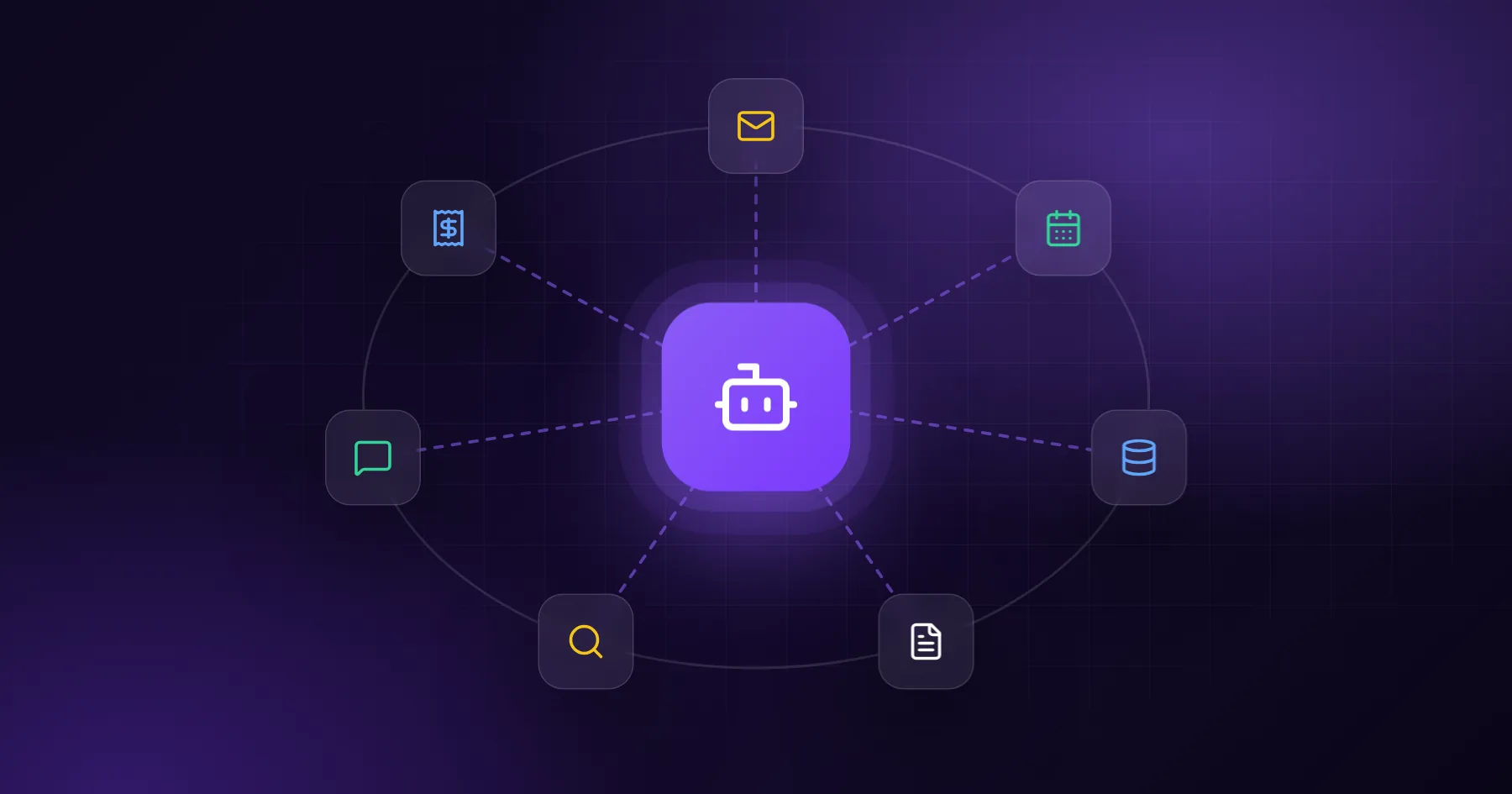
Connect every source to one pipeline: website forms, a shared email address, live chat, Meta and Google lead forms, marketplace messages. Each lead becomes a record in your CRM with its source attached. This step alone often reveals leads that were never answered.
Step 2: let AI read and structure the message
A language model can turn a free-text message such as "Hi, we need a new website for our dental clinic in Poznań, ideally before March, budget around 20k" into structured fields:
Service: website
Industry: dental clinic
Location: Poznań
Timeline: before March
Budget: around 20,000 PLN
Language: Polish
Your team no longer has to read every message twice, and the CRM becomes searchable.
Step 3: score and route
Define what a good lead looks like for you: service, budget range, location, company size. The AI applies these rules and adds a short reason ("Strong fit: website for a healthcare company, budget in range, clear deadline"). Then the lead is routed:
Strong fit → senior salesperson, notification right away
Possible fit → standard queue, reply within working hours
Poor fit → polite reply with alternatives or resources
Spam → filtered out
Step 4: a useful first reply within minutes
The first reply should do more than say "thank you". A good automated or AI-drafted reply:
Confirms what the person asked for, in their words
Answers one or two obvious questions (timeline, process)
Offers the next step: a booking link or a call at a specific time
Comes from a real person's name and address
For high-value leads, the AI drafts the reply and a person approves it with one click. For simpler cases, it can be sent automatically.
Step 5: follow-ups that do not depend on memory
Most deals need more than one touch. Set simple rules:
No reply after 2 days → short follow-up with one new piece of value
Meeting booked → reminder the day before
Quote sent → follow-up after 3 and 7 days
Lost deal → ask for the reason, add to a nurture list
Tools you can use
You do not need one big platform. A typical stack:
CRM: Pipedrive, HubSpot or a custom pipeline
Automation: n8n, Make or custom code for full control
AI: an API from Anthropic or OpenAI for reading and drafting
Calendar: a booking tool connected to your team's calendars
Messaging: transactional email, plus SMS or WhatsApp where it fits
For companies with specific processes, we build the workflow as custom code on their own backend, so data stays in their systems and the logic can grow. See our AI automations and integrations services.
What to measure
Speed to first reply: median minutes from enquiry to first answer
Contact rate: share of leads that reach a real conversation
Qualified rate: share of leads that match your criteria
Conversion by source: which channel brings clients, not just leads
Time saved: hours per week your team no longer spends sorting and copying
Measure these for a month before and a month after the automation. Speed to first reply usually improves the most, and it is the number most closely linked to winning the deal.
A worked example
A service company receives enquiries through a website form, email and Facebook lead ads. Before automation, replies took most of a working day, and weekend leads waited until Monday.
After setting up the workflow:
All sources land in the CRM with source and campaign attached
AI extracts service, location and timeline, and scores each lead
Strong leads trigger a phone notification to the owner
Every lead gets a personal first reply with a booking link within minutes, at any hour
Unanswered leads get a follow-up after two days
The sales team now starts each call already knowing what the client needs.
Will clients notice that the first reply is automated?
If the reply is specific to their message and signed by a real person, most will simply see a fast, helpful answer. Avoid generic text and be honest if they ask.
Is it safe to send lead data to an AI model?
Use providers with business terms that do not train on your data, send only what is needed, and keep the records in your own CRM. For sensitive industries, review this with your data protection officer.
How long does it take to set up?
A first version with one pipeline, AI extraction and an instant reply can be live in two to four weeks. Scoring, routing and follow-ups are added step by step.
Do we need a new CRM?
Usually not. Most CRMs have APIs that the automation can work with. If you have no CRM, a simple one is a good first step.