How we built Ecomtoro: an AI SaaS from idea to launch
Web apps
How we built Ecomtoro: an AI SaaS from idea to launch
A behind-the-scenes case study of Ecomtoro, our AI product research SaaS for Amazon, Shopify and TikTok Shop sellers: the problem, product decisions, AI agents, stack, billing, MCP and lessons learned.
In short
A behind-the-scenes case study of Ecomtoro, our AI product research SaaS for Amazon, Shopify and TikTok Shop sellers: the problem, product decisions, AI agents, stack, billing, MCP and lessons learned.
Ecomtoro is an AI product research tool for online sellers. A seller describes a product idea, and AI research agents check real sales history, search demand and competition across Amazon, Shopify and TikTok Shop markets in the US, UK and Germany, then work out the margin after every fee. We designed and built it end to end: the product, the AI agents, the dashboard, billing and the landing page.
This case study shows the decisions behind it. If you are planning your own SaaS or an AI-powered web app, these are the same questions you will face.
The problem we set out to solve
Sellers lose money on products that look good in a spreadsheet and fail in reality. The usual research process is manual and scattered: browse marketplace listings, guess demand from a few reviews, look up search trends, then estimate margins in a separate sheet that forgets half the fees.
We wanted one place where a seller could ask "Should I sell this?" and get an answer based on data, with the profit math done properly. The product had to be fast enough to test many ideas, and honest enough that sellers could trust it before buying stock.
Product decisions
Start from the question, not the data
Many research tools show dashboards full of numbers and leave the conclusion to the user. We designed Ecomtoro around a conversation: describe the idea, and the agents come back with a structured verdict, the evidence behind it and the numbers that matter. The dashboard exists to explore the evidence, not to replace the answer.
Profit math is a first-class feature
A product with strong demand can still lose money once marketplace fees, fulfilment, shipping and advertising are counted. The profit calculator takes every fee into account per marketplace, so the margin a seller sees is the margin they would actually get.
Keep users coming back
Product research is not a one-off. A watchlist with alerts lets sellers follow promising products and react when demand or competition changes. This turns a one-time check into a habit, which matters for a subscription business.
The AI research agent
The core of Ecomtoro is a research agent that works through a set of focused tools. Each tool has one clear job:
Tool
What it does
Product details
Pins down exactly which product and market the seller means
Market data
Pulls sales history and search demand over time
Competition
Checks how crowded the market is and how strong the leaders are
Economics
Runs the margin with every relevant marketplace fee
Decision
Combines the evidence into a clear verdict with reasons
Splitting the work into focused tools made each part easier to test and improve. It also made the output easier to explain: every verdict comes with the evidence behind it.
Stack and architecture
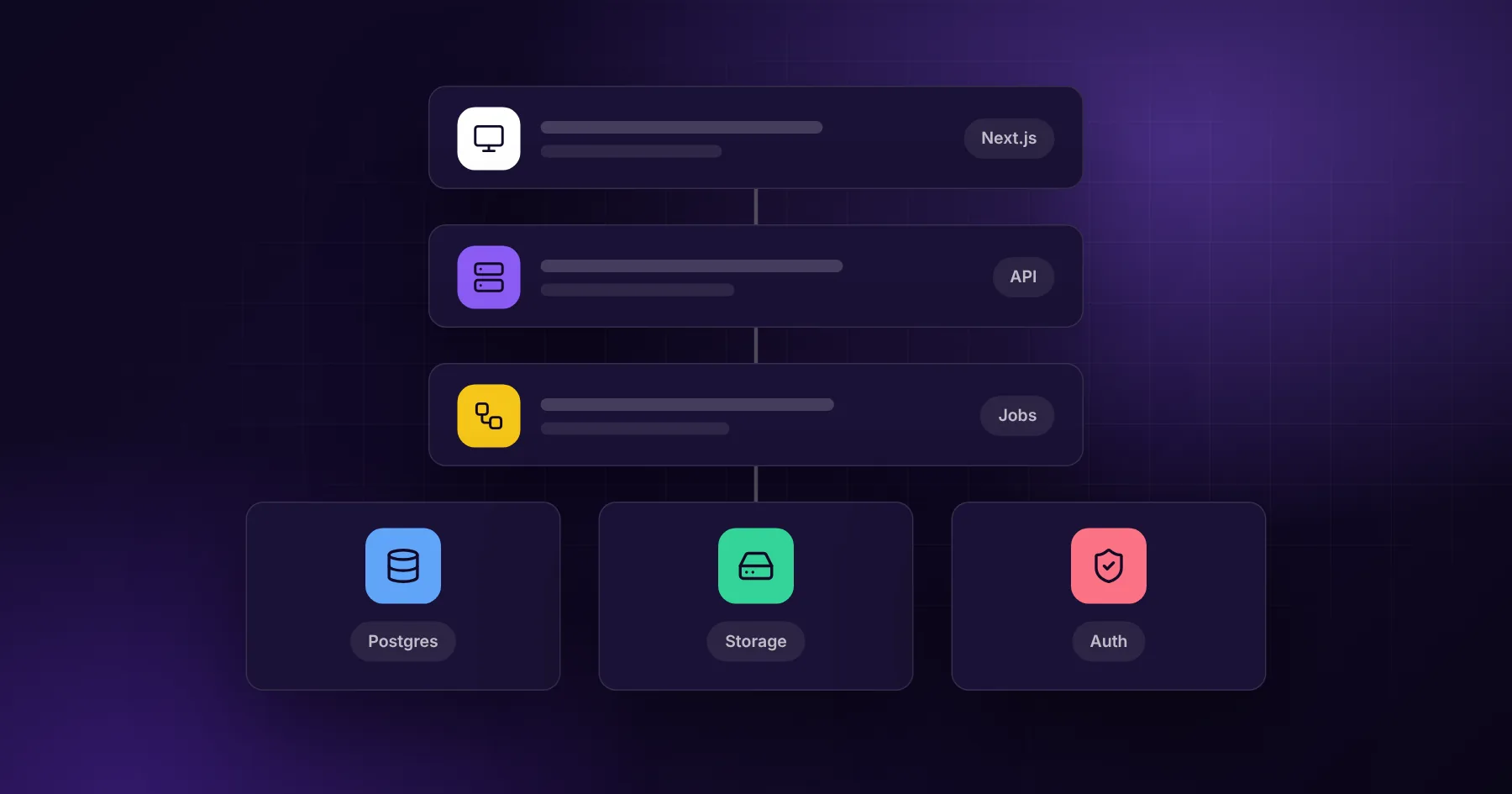
We built Ecomtoro on the same stack we use for client web applications:
Next.js for the marketing site and the app, so landing pages are fast and indexable while the dashboard stays interactive
PostgreSQL with Prisma for users, research results, watchlists and billing data
A Postgres-backed job queue and worker for research runs that take longer than a web request
Stripe for subscriptions, plan changes and invoices
An AI model API for the agents, behind our own orchestration layer
Moving long research runs into background jobs was one of the most important decisions. The user gets immediate feedback and progress updates, and a slow external source never blocks the interface. We explain these choices in choosing a backend for your SaaS.
Ecomtoro inside Claude and ChatGPT
Sellers increasingly work inside AI assistants. So we built an MCP connector: sellers can ask Ecomtoro questions directly from Claude and ChatGPT, and the assistant calls Ecomtoro's research tools behind the scenes. The same business logic serves the web app and the connector, so results are consistent wherever the question is asked.
This is a pattern we now recommend to many SaaS products: if your users already spend their day in an AI assistant, meet them there.
Billing and accounts
Subscriptions sound simple until you handle trials, upgrades, downgrades, failed payments and usage limits. Stripe handles payments and invoices; our backend keeps the source of truth for what each account may do, based on webhook events. Every limit is enforced on the server, never only in the interface.
The landing page
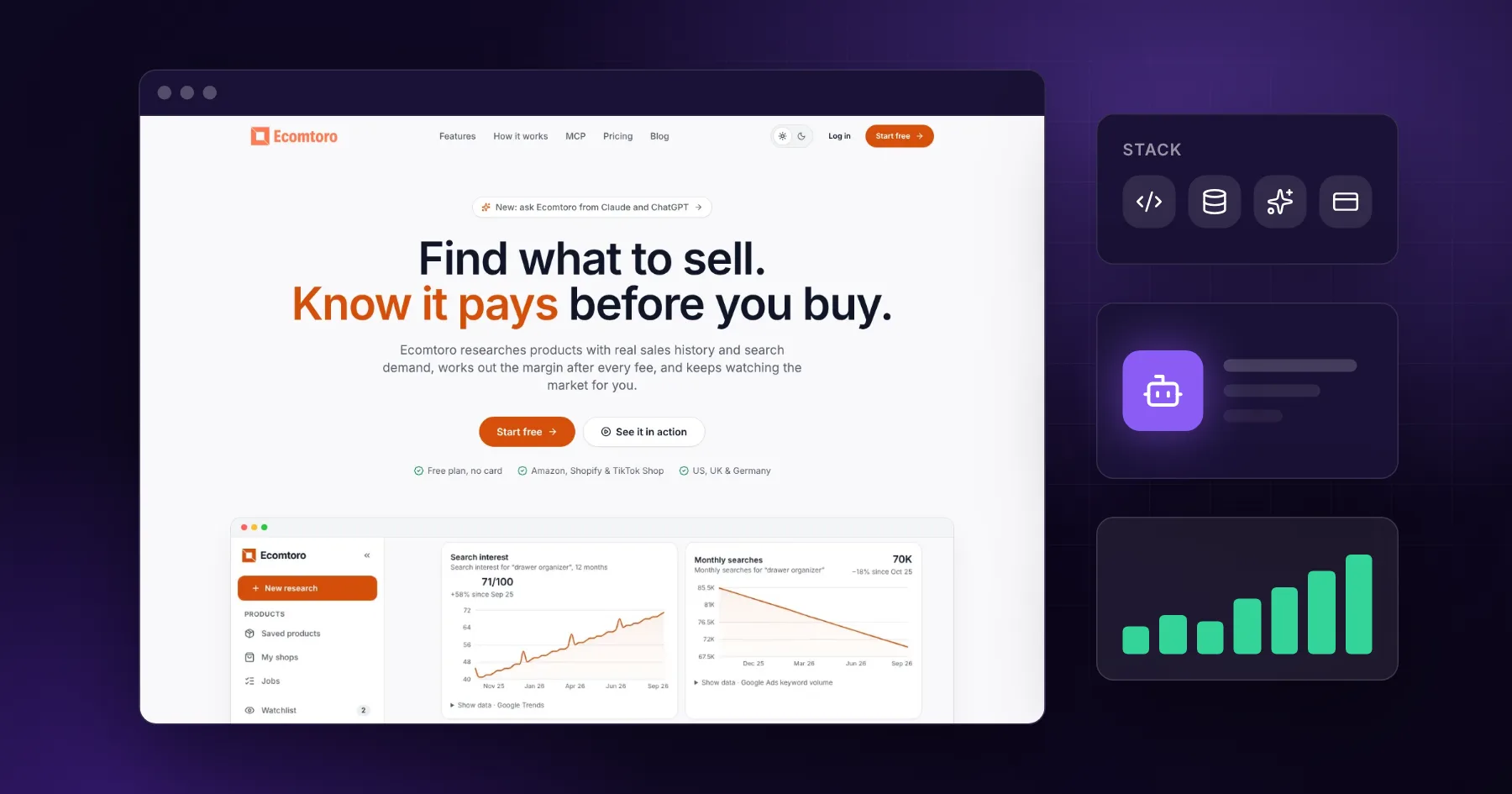
The landing page has one job: make a seller understand the promise in seconds and try it. The headline speaks the seller's language ("Find what to sell. Know it pays before you buy."), the page shows the real product interface instead of abstract graphics, and the call to action is repeated after each section. You can see it scrolling in our portfolio.
What we learned
Ship the core loop first. Idea → research → verdict was the first thing we built and tested. Everything else came after.
Make AI output explainable. Users trust a recommendation when they can see why.
Design for slow work. AI research takes time; progress, background jobs and notifications make that acceptable.
Treat billing as a product feature. Clear plans and limits avoid support tickets later.
Go where users already are. The MCP connector brought the product into tools sellers use every day.
What this means for your project
The same building blocks fit many businesses: a clear core workflow, AI agents with focused jobs, a solid backend with background processing, subscriptions, and a fast landing page. Whether you are building a SaaS or adding AI to an internal tool, we can help with web applications, AI automations and product design. Planning your first version? Read MVP in 6–8 weeks, then tell us about your idea.
Frequently asked questions
What is Ecomtoro?
An AI product research SaaS for Amazon, Shopify and TikTok Shop sellers. It checks demand, competition and margins before a seller buys stock.
Did TopWebSoftware build Ecomtoro for a client?
No, Ecomtoro is our own product. We use the same process and stack for client projects.
What is an MCP connector?
MCP (Model Context Protocol) is a standard way for AI assistants such as Claude and ChatGPT to use external tools. Ecomtoro's connector lets the assistant run Ecomtoro research on the user's behalf.
Can you build a similar AI SaaS for us?
Yes. We design and build SaaS products and AI-powered web apps from discovery to launch, including agents, billing and the marketing site.