Landing page for an ad campaign: how to build one that converts paid traffic
Landing page
Landing page for an ad campaign: how to build one that converts paid traffic
How to build a landing page for Google, Meta or TikTok ads: message match, one goal, page structure, form design, speed, tracking and A/B tests that lower your cost per lead.
In short
How to build a landing page for Google, Meta or TikTok ads: message match, one goal, page structure, form design, speed, tracking and A/B tests that lower your cost per lead.
A landing page for an ad campaign has one job: turn the click you paid for into a lead or a sale. It converts when it repeats the promise from the ad, focuses on one offer and one action, shows proof quickly, and loads fast on a phone. Everything else is a distraction.
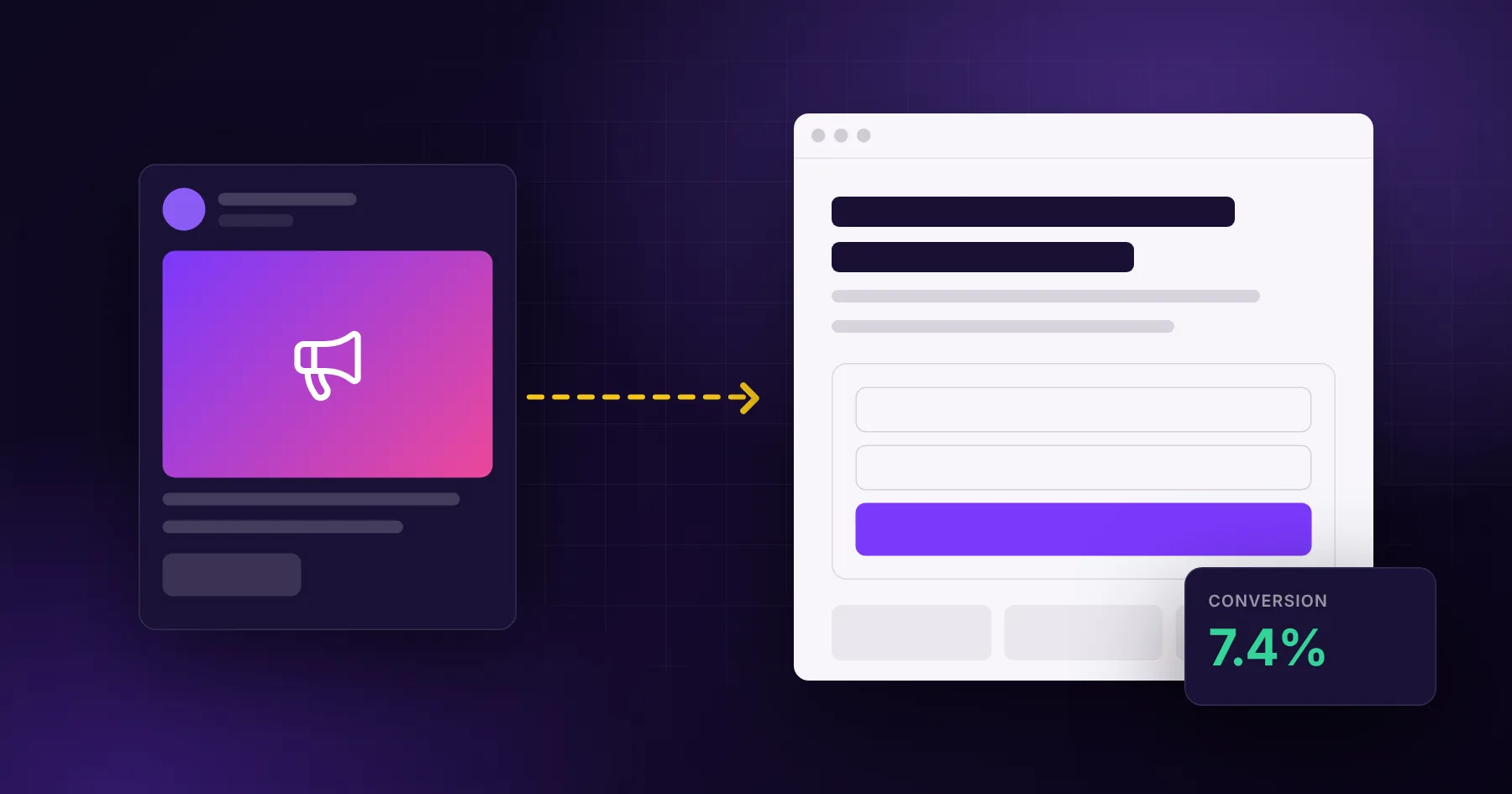
Sending paid traffic to a homepage is one of the most expensive mistakes in online marketing. The visitor clicked on a specific promise and lands on a general page with ten menu items. They have to look for what they came for, and most of them don't. This guide shows how to build a landing page that keeps the promise of the ad.
Why a dedicated landing page lowers cost per lead
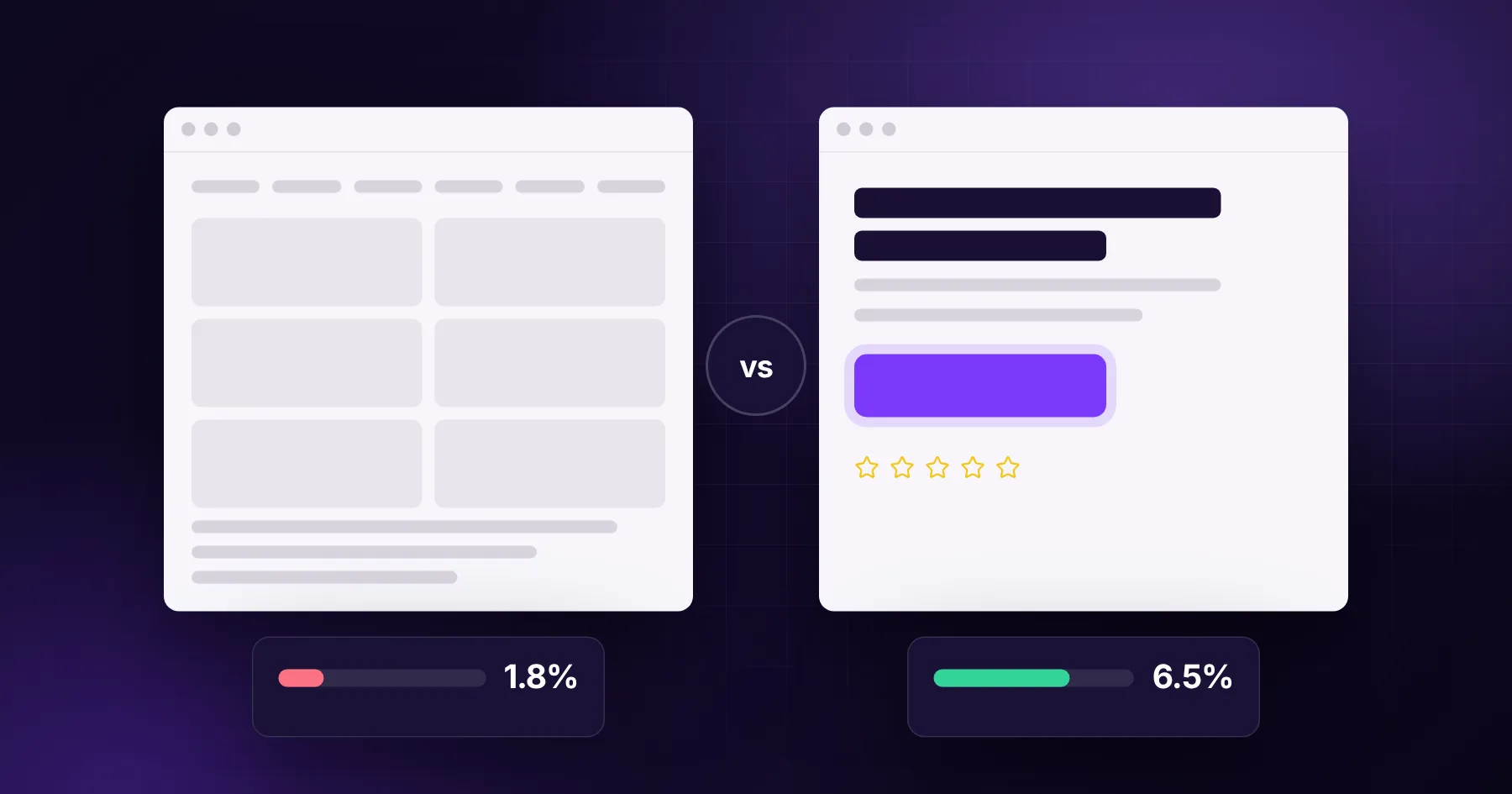
Your cost per lead is your cost per click divided by your conversion rate. If you pay 4 PLN per click and 2 in 100 visitors leave their details, each lead costs 200 PLN. Raise the conversion rate to 5 in 100 and the same lead costs 80 PLN, with the same ad budget.
Cost per click
Conversion rate
Cost per lead
4 PLN
2%
200 PLN
4 PLN
3.5%
114 PLN
4 PLN
5%
80 PLN
That is why the landing page is often a bigger lever than the ads themselves. Ad platforms also reward relevant landing pages: Google Ads uses landing page experience as part of Quality Score, which affects how much you pay per click.
Rule 1: message match
The headline of the landing page should repeat the promise of the ad almost word for word. If the ad says "Office cleaning in Warsaw from 8 PLN per m²", the page should open with the same offer, the same city and the same price. A visitor should feel "yes, this is what I clicked on" within one second.
Run one landing page per ad group or per audience when the promises differ. Several focused pages convert better than one page that tries to serve every ad.
Rule 2: one goal, no exits
A campaign landing page has one goal: a form send, a call, a booking or a purchase. Remove anything that pulls people away from it:
No full site menu, or a minimal one with just a logo and a contact button
No links to the blog or social profiles above the fold
No second offer competing with the first
One button text, repeated through the page
The structure that works
This is the order we use as a starting point for most lead-generation pages:
Hero: headline that matches the ad, one line of explanation, the main button, and one proof element (rating, client logos, or a key number).
Problem and outcome: the situation of the client and what changes after working with you.
What you get: three to five concrete benefits or deliverables.
Proof: reviews, a short case study, before and after.
How it works: three steps from enquiry to result.
Offer details: price or price range, guarantee, availability.
FAQ: the objections people have before they buy.
Final call to action: the form again, with a short reassurance ("We reply within 2 hours").
Designing the form
The form is where the money is made or lost. Keep it as short as your sales process allows:
Lead generation: name, phone or email, and one question. Three fields is a good target.
Qualified leads: add one or two qualifying questions as select fields (budget range, timeline) instead of open text.
Multi-step forms: for longer forms, split them into steps and start with the easiest question. People who answer the first step tend to finish.
After the form is sent, show a thank-you page that says what happens next and when. That page is also where your conversion tracking fires.
Speed is part of conversion
Paid visitors are impatient. A page that loads slowly loses people before the offer appears, and you still pay for the click. For campaign pages:
Keep the hero image small and in a modern format such as WebP or AVIF
Avoid video backgrounds and sliders above the fold
Load chat widgets and heavy scripts after the page is interactive
Test on a real phone over mobile data, not only on office Wi-Fi
We build campaign pages on Next.js for this reason: pages are pre-rendered and load fast, which helps both conversion and cost per click.
Tracking: measure leads, not clicks
Before the campaign starts, check that tracking works end to end:
Form sends fire a conversion event in Google Ads, Meta and analytics
Phone clicks and email clicks are tracked as separate events
UTM parameters are passed into the lead record or CRM
Server-side or enhanced conversions are set up where possible
You can see cost per lead per ad group, not only per campaign
Without this, the ad platform optimises for the wrong thing. It will find people who click, not people who become clients. Our ads strategy service starts with this set-up.
Testing what works
Once the page gets steady traffic, test one change at a time. The tests that usually move the numbers most:
The headline and the main promise
The offer itself (a free audit, a price guarantee, a faster timeline)
Form length and the first question
The proof element in the hero
The button text
Small visual changes, such as button colour, rarely make a measurable difference on small budgets. Spend your test traffic on the message and the offer.
A worked example
A company runs Google Ads for "landing page for Google Ads" and sends traffic to its homepage. The homepage explains five different services and has a long contact form in the footer.
The new landing page:
Headline: "Landing pages for Google Ads, live in 7 days"
Hero proof: two client logos and a short quote
Three benefits: built to match your ads, fast on phones, tracking set up
A three-step process and a fixed price range
A three-field form at the top and again at the end
The ads and the budget stay the same. The change is in the page that receives the traffic. That is the work we do in landing pages, together with the ad creative that sends people there.
Landing page or homepage?
For campaigns with one clear offer, a dedicated landing page almost always wins. Your homepage still matters for brand searches and visitors who want to explore. We compare the two in detail in Google Ads landing page vs. homepage.
Frequently asked questions
How long should a landing page be?
As long as the decision needs. A cheap, simple offer can work with a short page. A larger purchase needs more proof and answers, so the page can be longer, as long as the main button stays visible.
Can I use one landing page for all my ads?
Only if all ads make the same promise to the same audience. Different offers or audiences need their own page or at least their own headline.
What is a good conversion rate for a landing page?
It depends heavily on the industry, the offer and the traffic source. Instead of chasing a benchmark, measure your own starting point and improve it test by test.
Do I need a separate domain for landing pages?
No. A path on your main domain, such as /offer/office-cleaning, works well and builds trust with the brand you already have.