Local SEO for service companies: a step-by-step plan to win searches near you
SEO
Local SEO for service companies: a step-by-step plan to win searches near you
How service businesses get found in local Google searches and Maps: Google Business Profile, reviews, location and service pages, citations, local links, tracking calls and a 90-day plan.
In short
How service businesses get found in local Google searches and Maps: Google Business Profile, reviews, location and service pages, citations, local links, tracking calls and a 90-day plan.
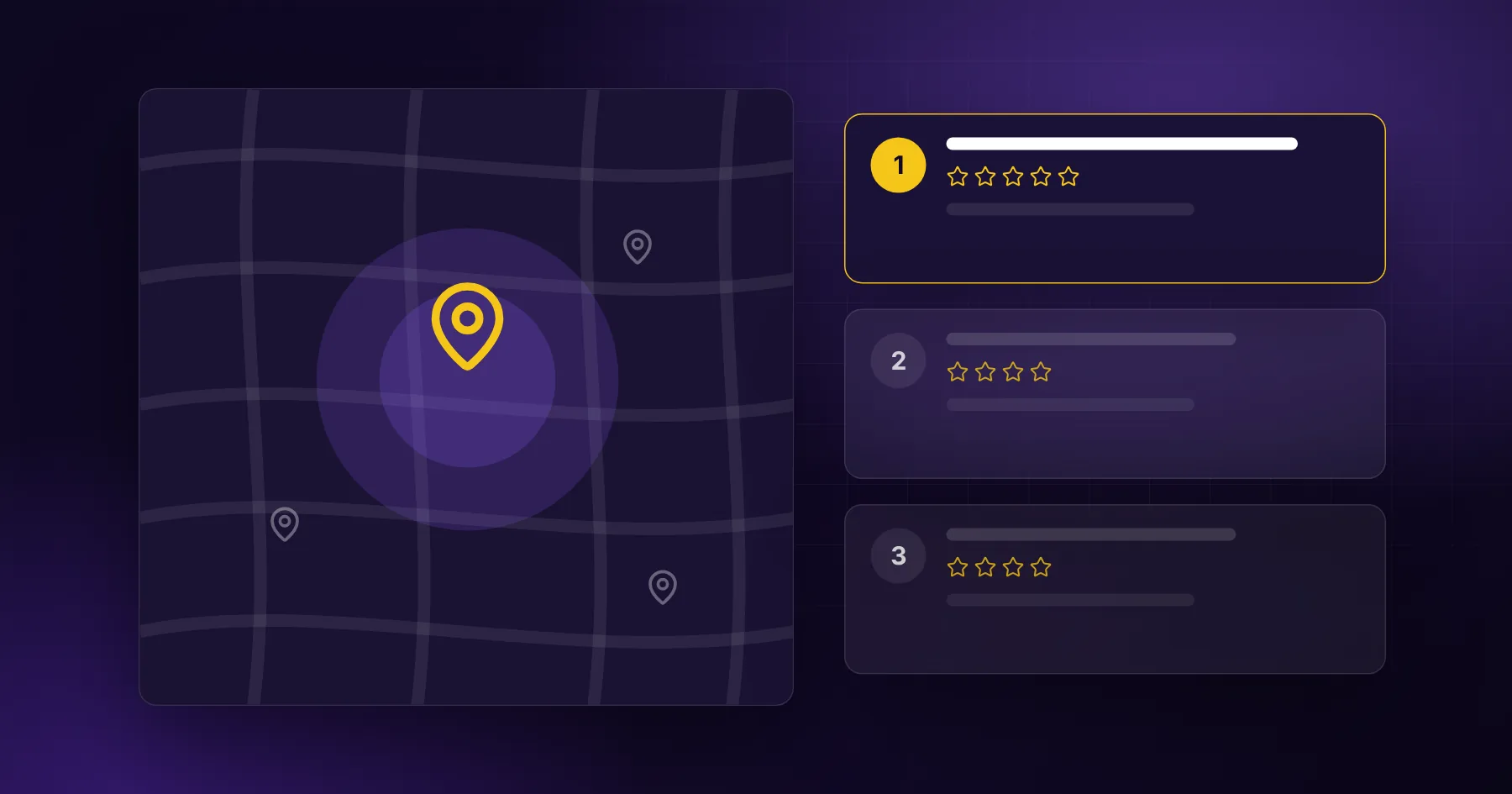
Local SEO gets a service company into the map results and local organic results when people search for a service near them, such as "electrician Gdańsk" or "accounting office near me". It rests on four things: a complete and active Google Business Profile, a steady flow of genuine reviews, strong service and location pages on your website, and consistent business details across the web. For many local businesses, it is the cheapest source of high-intent enquiries.
People who search for a local service usually need it soon. They compare three or four companies in the map results, look at ratings and photos, and call. If you are not in that short list, you are not in the decision.
How local results are ranked
Google describes three main factors for local results:
How far you are from the searcher or the searched location
Your address and service area (you cannot change geography)
Prominence
How well known and trusted you are
Reviews, links, mentions, overall SEO strength
You cannot move your office closer to every customer, but you can be more relevant and more prominent than competitors in your area.
Step 1: Google Business Profile, fully completed
Your Business Profile is often the first thing a local customer sees. Complete every part:
Primary category that matches your main service exactly, plus relevant secondary categories
Services listed one by one, with short descriptions
Service area if you travel to clients, or a precise address if they come to you
Opening hours, including special hours for holidays
Photos of your team, work, vehicles and premises, added regularly
Business description that says what you do, where and for whom
Website link to the most relevant page, and a booking or contact link
Use the Updates feature to post news, offers or recent projects. An active profile signals a real, working business.
Step 2: a system for reviews
Reviews influence both ranking and the click. Build a simple routine:
Ask every satisfied client, right after the job, while the experience is fresh.
Send a direct link to the review form by SMS or email.
Make it easy: one short message, no long instructions.
Reply to every review, positive and negative, politely and specifically.
Never buy reviews or offer rewards for positive ones. It breaks Google's rules and damages trust. A steady flow of genuine reviews beats a sudden burst.
Step 3: service pages that match local searches
Your website gives Google the detail it needs to connect your business with specific searches. Each main service needs its own page with:
The service and location in the title and main heading, written naturally
What the service includes, prices or price guidance, and the process
Local proof: projects in the area, reviews from local clients
Contact details and a clear call to action
LocalBusiness structured data with your name, address and phone
If you serve several towns, separate location pages can help, but only when each page is genuinely different:
Projects you completed in that town
Reviews from clients there
Local team members or partners
Practical details: travel times, areas covered, local regulations if relevant
Pages that only swap the town name are thin content. They rarely rank and can weaken the whole site. Fewer, richer pages are better.
Step 5: consistent business details (NAP)
Your name, address and phone number (NAP) should be identical everywhere: website, Business Profile, social profiles, industry directories and local listings. Inconsistent details confuse both customers and search engines.
Useful places for a Polish service business include industry directories, local business listings and your chamber of commerce or trade association. Quality matters more than quantity.
Step 6: local links and mentions
Links from local and industry websites strengthen prominence:
Local partners and suppliers
Sponsorships of local events or sports clubs
Local news coverage of a project
Industry associations and certifications
Guest articles on relevant local or trade sites
Step 7: track calls and enquiries, not just rankings
Rankings move every day and differ by location. What matters is enquiries. Track:
Calls, website clicks and direction requests from the Business Profile
Form sends and phone clicks on your website, by page
Which services and towns bring enquiries
Your review count and average rating over time
A 90-day plan
Weeks
Focus
1–2
Complete and verify Business Profile, fix NAP everywhere
3–4
Set up the review routine, reply to all existing reviews
5–8
Build or improve service pages with local proof and structured data
9–10
Add location pages where you have real local content
11–12
Start local link building, review tracking and adjust
Local SEO compounds: reviews, photos, pages and links keep adding up month after month.
Profile and review improvements can show results within weeks. Ranking for competitive local searches usually takes a few months of consistent work.
Do I need a physical office to rank locally?
You need a real business address for the profile, but you can hide it and set a service area if you work at clients' locations.
Should I create a page for every town?
Only for towns where you have real projects, clients or a team. Thin pages that only change the town name do more harm than good.
Are reviews more important than the website?
Both matter. Reviews strongly influence clicks and trust in the map results, while the website gives Google the content to match you with specific searches.